Alwyn Crawshaw
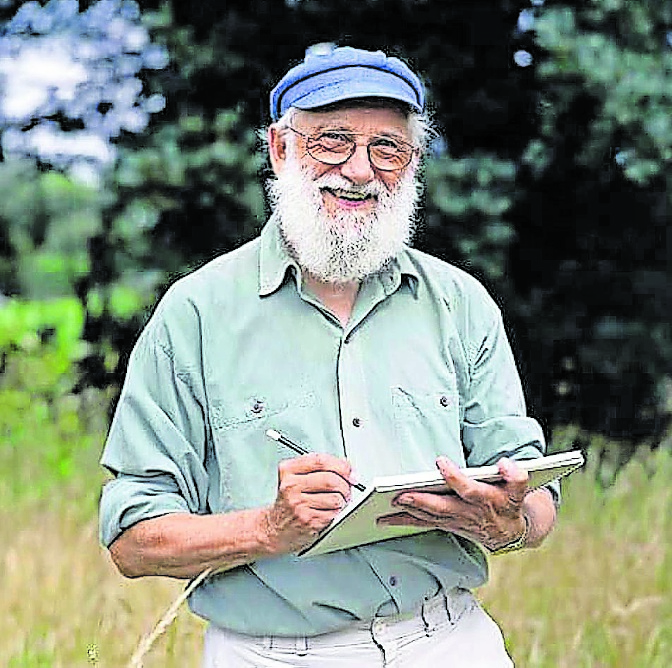
Alwyn Crawshaw was seven years old when he decided he wanted to be an artist. As he crouched on the floor of the family’s air-raid shelter with his paper and pens while listening to the drone of German bombers overhead, drawing not only alleviated the unsettling combination of tedium and fear but seemed a way of imposing a sense of order on a world turned upside down.
He went on to devote his life to painting and drawing, both as a commercial artist and as an evocative painter of traditional landscapes that eschewed modern abstraction and harked back to the age of Constable and Turner. Above all, though, he will be remembered as a teacher whose kindly manner steered a generation of amateurs through the problems and challenges of capturing on canvas the images and scenes that had caught their eye.
Crawshaw never taught at a formal art school but through his television series, instructional videos and books he assisted more people to pick up a brush and try their hand at painting than passed through all of the nation’s specialist art schools and colleges over the past 40 years.
As an author there were more than two dozen titles, including the pioneering A Brush with Art, which spent nine weeks on the bestsellers’ list, the first time an art manual had ever nestled there alongside the blockbusters of John Grisham and Stephen King. It was estimated that during the 1990s one of his books was taken out of a UK library every two minutes, making him one of the highest-ranking authors on the Public Lending Rights list.
He also made eight How to Paint television series for Channel 4 and the BBC, which were syndicated and broadcast worldwide, and hosted How to Paint roadshows, demonstrations and even painting holidays at which he showed hosts of eager amateurs how to work with light and shade or how to capture the reflection of sky on water, always accompanied by his catchphrase “give it a go”.
He was avuncular with a huge bushy white beard and peaked cap. Much of his work was conducted in tandem with June, his wife. She co-authored many of his books and was the co-presenter of three television series, painting alongside her husband in her trademark straw hat. A BBC presenter once introduced one of their programmes by calling them “the Morecambe and Wise of the art world”.
Their cultural ubiquity was recognised when they were gently sent up in a series of sketches in the 1990s BBC comedy series The Fast Show in which Crawshaw was cast as the ageing, kindly, bearded artist “Johnny Nice Painter”, played by Charlie Higson, painting alongside his wife “Katie” played by Arabella Weir.
The gist of the joke was that he would describe the various colours in his palette with effusive enthusiasm until his wife mentioned the colour black, the trigger for an almost psychotic reaction in which he was plunged into despair and began to bewail the misery of human existence.
“‘Black! Black! You lock me in the cellar and feed me pins!” was one memorable line. Crawshaw not only rather enjoyed the joke but wore it as a badge of honour, although his children became tired of friends constantly reminding them of it.
He and June were married for almost 70 years and celebrated their diamond wedding anniversary in 2017, not with a dream holiday on a Caribbean island but by holding a joint art exhibition of their work.
His pioneering book A Brush with Art spent nine weeks on the bestsellers’ list
She survives him with their three children: Clinton, a church pastor in California, Natalie and Donna, a professional artist.
Alwyn Crawshaw was born in 1934 in Mirfield, west Yorkshire, the only boy among four children. His mother, Doris, worked in the mills and his father, Fred, was a cabinet-maker.
The family later moved to the Sussex coast, where he attended Hastings Grammar School before switching to the town’s art school at the age of 15 with his twin sister, who as Shirley Harrell also became a wellknown professional artist.
After he and Shirley had graduated the family moved again to Woking, Surrey, from where he commuted to his first job as a trainee commercial artist for a London publishing company.
His artistic endeavours were interrupted by two years’ National Service based at Aldershot, where he avoided some of the more strenuous tasks of army life because of his skills as a conjuror and ventriloquist, travelling to other bases as a member of the Army Green Room Club and entertaining his fellow conscripts under the name “Alwyno the crazy magician”.
On being demobbed, he returned to his old job in London and married June, a friend of his twin sister. While working nine to five as a commercial artist, he painted endlessly for pleasure at home in the evenings and weekends and continued to do so after founding his own commercial art and advertising business in 1959. In his early days he exhibited and sold his work on the railings in Bayswater Road.
Creating brand images for Lever Brothers products such as Surf and Lifebuoy, he worked commercially until 1980, by which time he had published his first book. Healthy sales encouraged him to abandon commercial work and devote himself entirely to fine art.
A year later he moved the family to Devon and his first TV appearance came soon after on Pebble Mill At One. June, who had been a full-time potter, switched her focus to painting and helped her husband to establish his instructional classes, particularly via the new medium of video. Using their own camera and fitting out an editing suite in their home, their first video was distributed via their company Teaching Art Ltd in 15 countries.
In 1989 the Channel 4 producer David Hare gave Crawshaw his first 12-part television series, A Brush with Art, which was filmed in the West Country, with its rich offering of traditional painterly scenes.
By his third series, Crawshaw Paints on Holiday (1992), June had joined him in front of the camera and The Fast Show spoof was evidence of how popular his programmes had become. The couple also opened their own gallery in Dawlish, which they ran until 2009 when they moved to Norfolk, where they kept a boat on the Broads.
Although his choice of subject matter — sail boats in a harbour, rustic scenes populated by working horses — tended towards the traditional, he was innovative and open-minded in his methods and was one of the first non-abstract British artists to adopt the new acrylic paints when Rowney introduced its Cryla range in the early 1960s.
As a teacher he was a populist who believed that enthusiasm and generous encouragement were as important as the application of technical rules. “To everyone who wants to be an artist what we say is have a go,” he observed. “It is easier than you think and we try to take the mystery out of it.”
Alwyn Crawshaw, painter, was born on September 20, 1934. He died after a short illness on November 10, 2025, aged 91

.jpeg)
No comments:
Post a Comment